I just published the next Lucid Leader essay on Substack.
It follows Why Mindfulness Matters. That piece was why presence matters; this one is how we live it through an ordinary day: NASA in the morning, Zen in the meeting, Do on the commute.
I just published the next Lucid Leader essay on Substack.
It follows Demystifying Mindfulness. This one is why reclaimed presence matters in the corporate arena, how it multiplies impact, and what BeLucidNow feels like when the day is still full.
I just published a longer essay on Substack — the opening of the Lucid Leader series.
It’s about BeZenDo, BeLucidNow, and something I’ve lived for a long time: the deepest rest isn’t only a leave form or a plane ticket. It can be touched in the middle of the day, in the body, while the inbox is still there.
Not a trick. A quiet choice: stay hydrated, sleep when the body wants rest, find daylight when you land — and refuse to rehearse how bad you’re supposed to feel. Don’t keep mental score of what time it is back home. Stay as present as you can. Breathe. Notice the seat. Rest in the now.
The body is remarkably willing to follow when the mind stops creating stories.
Expectation of jet lag can predict the fog more strongly than the number of time zones crossed. The mind’s story about the body often becomes the body’s reality. Outer conditions still exist. They no longer have to dictate the whole experience.
This is not magical thinking. It is practical spirituality.
What small shift in your own story could you make today?
Be, Here, Now…
This teaching appeared in more detail in Anandda magazine.
A mind that is always seeking, or always resisting, never actually meets this moment. It is busy becoming, fixing, getting away. Practical thought can still find the keys and answer the person in front of you. That kind is a tool. The rest is a loop.
No-mind is not emptiness for its own sake. It is room. Room to sit. Room to see. Room to act without the argument running underneath.
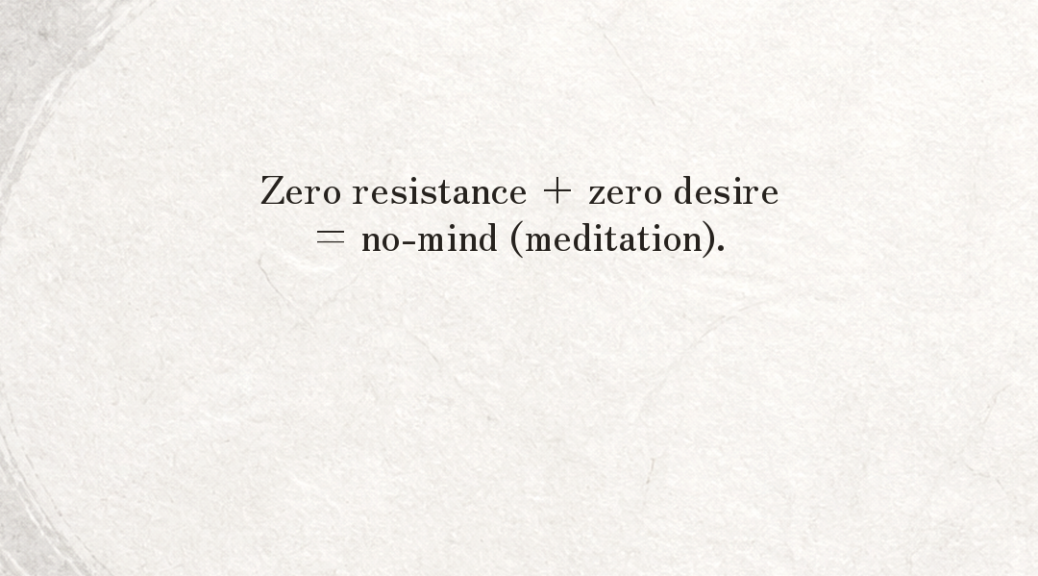
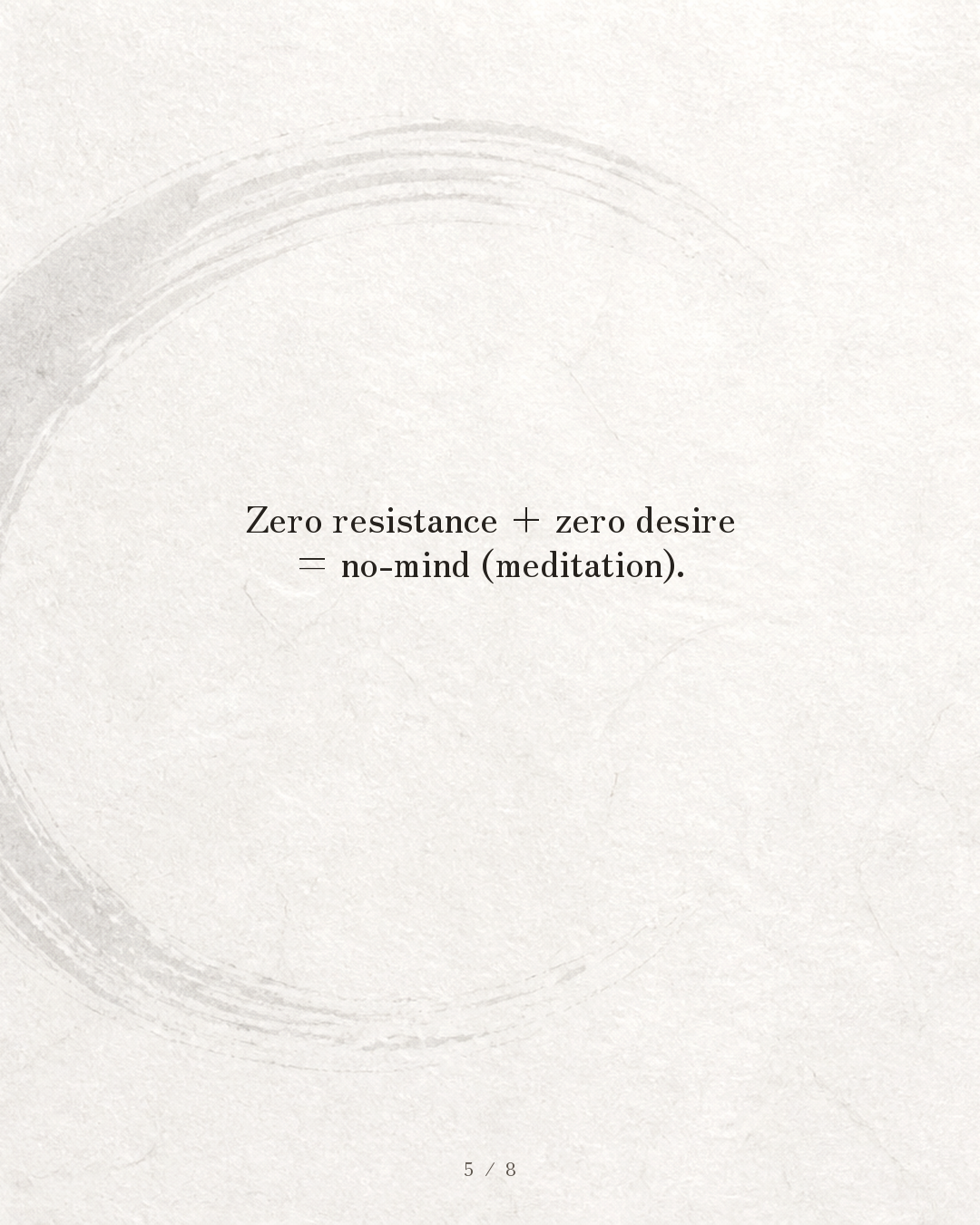
Zero resistance + zero desire = no-mind (meditation).
Our minds can only be still, i.e. entertain no thoughts when we’re not seeking or resisting anything. Such a point of stillness is meditation. Which is why meditation is simple to understand but not so easy to practice.